
Dragon's Dogma 2: Dark Arisen Vocation Tier List: Ranked
Use this Dragon's Dogma 2: Dark Arisen vocation tier list to compare all 10 classes, understand their combat strengths, and pick your endgame playstyle.
Jump to
The Dragon's Dogma 2: Dark Arisen vocation tier list puts Warfarer, Thief, and Mystic Spearhand at the top for endgame combat. Your choice matters because flexible weapon combinations, reliable defenses, and heavy damage offer different ways to handle difficult encounters. Use this Dragon's Dogma 2: Dark Arisen vocation tier list to compare all 10 classes and choose a combat style that fits how you want to fight.
The rankings focus on endgame performance. Read each tier alongside its combat strengths: a powerful spellcaster, a mobile melee attacker, and a flexible weapon specialist earn their value in different ways.
S Tier: Warfarer, Thief, and Mystic Spearhand
The S tier brings together three distinct strengths: adaptability, aggressive damage with defensive options, and a balanced mix of offense and protection. These vocations lead the Dragon's Dogma 2: Dark Arisen vocation tier list, but they reward different priorities.
| Vocation | Tier | Why It Ranks Here |
|---|---|---|
| Warfarer | S | Equips weapons from every vocation and combines combat styles to adapt to different enemies. |
| Thief | S | Delivers strong damage with excellent mobility and defensive options, including Formless Feint. |
| Mystic Spearhand | S | Combines damage, mobility, crowd control, and protection through Mirour Shelde. |
Warfarer: The Top Pick for Adaptability
Warfarer takes the highest position because it can equip weapons from every vocation. That gives it the flexibility to combine combat styles rather than approach every enemy with the same kind of attack.
Its appeal extends across endgame exploration and boss encounters. Different enemies call for different approaches, and Warfarer's weapon access gives you room to adjust your loadout around those demands. The defining advantage is the ability to bring several combat styles into your setup.
Build your weapon selection around distinct purposes. Combine styles that address different enemies instead of choosing every weapon for the same job. Make that flexibility the center of your setup; it is the reason Warfarer sits at the top.
Choose Warfarer if adapting your equipment and approach is the part of combat you enjoy most. Its ranking reflects how broadly it can respond to encounters.
Thief: Strong Damage Without Giving Up Mobility
Thief earns its S-tier position through a combination of damage, movement, and defensive tools. It remains one of the strongest damage dealers, while its mobility gives it another advantage beyond raw offense.
Formless Feint helps avoid incoming attacks. Combustive Caper and Powder Barrage provide offensive options, giving the vocation recognizable tools for both dealing damage and managing danger.
Use Formless Feint to help avoid attacks, and make use of Thief's mobility during close-range combat. Keep its offensive and defensive strengths working together instead of judging the class only by its damage output.
Thief offers a focused alternative to Warfarer. Where Warfarer stands out through access to different weapons and combat styles, Thief earns its place through the strength of its own offensive and defensive toolkit.
Mystic Spearhand: Offense With Protection
Mystic Spearhand brings damage, mobility, and crowd control into one vocation. Mirour Shelde adds protection, rounding out a toolkit that covers several combat needs.
That combination explains its place beside Warfarer and Thief. Mystic Spearhand has more to offer than damage alone: movement, control, and protection all contribute to its endgame performance.
Use Mirour Shelde alongside your offensive tools, and make room for crowd control in your approach. Take advantage of the full toolkit rather than focusing on a single ability.
Choose Mystic Spearhand if you want a vocation whose strengths span several parts of a fight. Its S-tier position comes from that balance.
A Tier: Warrior, Fighter, and Magick Archer
The A tier includes heavy melee damage, ranged magical offense, and Fighter. These vocations sit immediately below the leading trio in the Dragon's Dogma 2: Dark Arisen vocation tier list.
| Vocation | Tier |
|---|---|
| Warrior | A |
| Fighter | A |
| Magick Archer | A |
Warrior: Heavy Damage Against Vulnerable Enemies
Warrior excels at delivering heavy damage, especially against enemies that are staggered or knocked down. That strength makes it a powerful choice for endgame encounters where you can capitalize on those openings.
Its main drawback is dealing with agile opponents. Heavy damage has less value when a fast-moving enemy makes it difficult to connect.
Focus your strongest attacks on staggered or downed enemies. Against agile targets, prioritize an opening you can use instead of committing simply because an attack is available.
The distinction between Warrior and Thief is useful when choosing a melee vocation. Warrior emphasizes heavy punishment, particularly against vulnerable enemies. Thief combines strong damage with excellent mobility and defensive options. Choose around the kind of combat you want to manage.
Magick Archer: Powerful Ranged Offense
Magick Archer delivers substantial ranged damage from a safe distance. It is one of the strongest choices for ranged magical combat, with magic-resistant enemies presenting its main limitation.
Its A-tier placement still puts it among the stronger endgame vocations. The ranking reflects both its offensive strength and the matchup that can reduce its effectiveness.
Maintain distance while using its ranged attacks. When facing magic-resistant enemies, account for that resistance in your combat plan instead of expecting the same performance against every target.
Magick Archer and Warrior offer different routes to damage. Choose Magick Archer for ranged magical attacks; choose Warrior if heavy melee attacks and opportunities against staggered enemies better match your preferred style.
Fighter's Position in the Rankings
Fighter completes the A tier, sharing its endgame placement with Warrior and Magick Archer. It sits above the B-tier group of Archer, Sorcerer, and Mage, while Warfarer, Thief, and Mystic Spearhand occupy the higher S tier.
B Tier: Archer, Sorcerer, and Mage
The B tier includes dependable ranged attacks and powerful spellcasting with practical limitations. These classes remain part of the endgame comparison, but Archer and Sorcerer face drawbacks that help explain their positions.
| Vocation | Tier |
|---|---|
| Archer | B |
| Sorcerer | B |
| Mage | B |
In the Dragon's Dogma 2: Dark Arisen vocation tier list, read B tier as a lower overall endgame placement. Archer's precision and Sorcerer's magical damage still provide clear reasons to consider them.
Archer: Dependable Damage and Weak-Point Targeting
Archer provides reliable ranged damage and can target enemy weak points from a safe distance. Its upgraded attacks and downed-enemy finishers improve its performance.
The limitation is defense. Archer lacks the defensive capabilities of higher-ranked vocations, which matters when comparing it with Thief's avoidance tools or Mystic Spearhand's protection.
Aim for weak points, use distance to support your ranged attacks, and take advantage of downed-enemy finishers when those opportunities appear. Build your approach around the strengths Archer actually brings.
The difference between Archer and Magick Archer is also relevant. Both offer ranged offense, but Magick Archer's damage has a stated weakness against magic-resistant enemies. Archer's ranking instead highlights its weaker defensive capabilities relative to higher-tier choices.
Sorcerer: Devastating Spells With Long Casts
Sorcerer can deal devastating magical damage through its skills. Its challenge is creating enough space and time to cast those spells.
Long casting times require you to manage enemy aggression, and agile opponents make that task harder. Its B-tier placement reflects the difficulty of delivering its damage under pressure.
Manage enemy aggression before committing to a long cast. Against agile enemies, choose your casting opportunities carefully rather than relying on a spell's damage to solve the encounter by itself.
Sorcerer and Warrior share a useful comparison: both can deliver significant damage, and both can struggle against agile opponents. Their strengths work differently, but choosing either means paying attention to opportunities to connect.
Mage's Position in the Rankings
Mage shares B tier with Archer and Sorcerer. That places it below the A-tier trio and above Trickster in the endgame order.
Keep that placement separate from Sorcerer's specific strengths and weaknesses. Sorcerer's powerful spells and long casting times explain Sorcerer's ranking; they should not be used as a substitute for understanding Mage.
C Tier: Trickster
Trickster occupies the lowest tier in this endgame ranking. It is the only vocation in C tier, below the three classes in B.
| Vocation | Tier |
|---|---|
| Trickster | C |
For a choice driven primarily by the Dragon's Dogma 2: Dark Arisen vocation tier list, prioritize the higher-ranked options. Warfarer, Thief, and Mystic Spearhand lead the comparison, while Warrior, Fighter, and Magick Archer form the next group.
Keep the purpose of the ranking in view: it orders endgame performance. Trickster's C-tier position establishes where it sits in that comparison without assigning it additional strengths or weaknesses.
Choosing a Vocation for Dark Arisen's Challenges
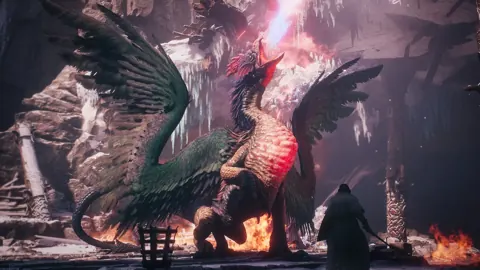
Dark Arisen adds adventures in Norgan, encounters connected to the Fallen Dragon, and the Lost Rites dungeon challenges. Forgotten relics can be unearthed and appraised to unlock powerful new weapons and skills, adding more equipment and ability choices to your adventure.
| Expansion Content | What It Adds |
|---|---|
| Forsaken Dominion | An adventure in the snowy northern region of Norgan, involving Eir and the undying Fallen Dragon. |
| Forgotten relics | Relics to unearth and appraise for powerful new weapons and skills. |
| Lost Rites | 12 dungeon challenges featuring rare equipment once held by past Arisens. |
Use the Dragon's Dogma 2: Dark Arisen vocation tier list to narrow your options, then compare the strengths behind each placement.
- For adaptable loadouts: Choose Warfarer and combine weapons from different vocations.
- For damage with mobility and avoidance: Choose Thief and use its offensive tools alongside Formless Feint.
- For damage, control, and protection: Choose Mystic Spearhand and incorporate Mirour Shelde.
- For heavy attacks against vulnerable enemies: Choose Warrior and capitalize on staggered or downed targets.
- For ranged magical damage: Choose Magick Archer and account for magic-resistant opponents.
- For ranged precision: Choose Archer and target weak points.
- For devastating spells: Choose Sorcerer and manage aggression around long casting times.
Those choices follow different priorities. Warfarer's flexibility, Thief's mobility, and Mystic Spearhand's protection explain why the leading group is especially appealing, while the lower tiers still contain clearly defined combat strengths.
Dark Arisen requires Dragon's Dogma 2. Before playing the expansion, update to the latest patch if needed. If you are purchasing it, check the Dragon's Dogma 2: Dark Arisen expansion page on Steam and review bundle contents to avoid buying the same product twice.
FAQ
Which vocation tops the Dragon's Dogma 2: Dark Arisen vocation tier list?
Warfarer takes the top position because it can equip weapons from every vocation and combine different combat styles. Thief and Mystic Spearhand also occupy S tier, supported by their combinations of damage, mobility, and defensive tools.
Why is Magick Archer in A tier?
Magick Archer delivers significant ranged damage from a safe distance, making it one of the stronger choices. Magic-resistant enemies are its main limitation. Its overall endgame placement is A tier alongside Warrior and Fighter.
Why are Archer and Sorcerer in B tier?
Archer offers dependable ranged damage and weak-point targeting but lacks the defensive capabilities of higher-ranked vocations. Sorcerer delivers devastating magical damage, yet long casting times require aggression management and make agile opponents harder to handle.
Does Dark Arisen require the base game?
Yes. Dragon's Dogma 2: Dark Arisen requires Dragon's Dogma 2. Update to the latest patch if needed before playing, and check whether a bundle already includes the expansion before purchasing it separately.
Continue with
Dragon's Dogma 2: Dark Arisen Warrior Build: Skills & GearPerfect your Dragon's Dogma 2: Dark Arisen warrior build with knockdown skills, powerful gear, rings, and augments. Learn how to topple monsters in Norgan.More in Classes
Dragon's Dogma 2: Dark Arisen Fighter Build: Skills & Gear
Master your Dragon's Dogma 2: Dark Arisen fighter build with skill combos, knockdown gear, augments, and practical tips for taking on Norgan's tough foes.
Dragon's Dogma 2: Dark Arisen Magick Archer Build: Guide
Dragon's Dogma 2: Dark Arisen magick archer build guide covering skills, bows, augments, pawn roles, and Harmonic Pentad. Prepare for Lost Rites dungeons.
Dragon's Dogma 2: Dark Arisen Thief Build: Best Skills
Master your Dragon's Dogma 2: Dark Arisen thief build with explosive skills, dagger upgrades, useful augments, and practical tactics for mobs and bosses.
Dragon's Dogma 2: Dark Arisen Best Build: Relic Guide
Find your Dragon's Dogma 2: Dark Arisen best build with vocation relic rolls, armor passives, Archer skills, and practical tips for gearing up in Norgan.
Join the community
Official channels for news, updates and player help: